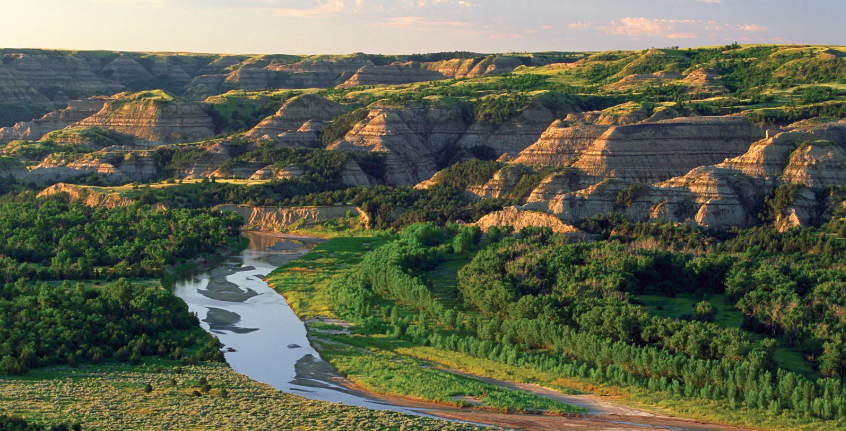
Theodore Roosevelt National Park, located in western North Dakota, is a rugged and scenic destination known for its striking badlands, diverse wildlife, and historical significance as the place where President Theodore Roosevelt developed his love for conservation. Here’s a travel guide to help you plan your visit to this unique national park:
1. When to Visit:
- The best time to visit Theodore Roosevelt National Park is during the late spring (May and June) and early fall (September and October) when the weather is mild, and the park’s wildlife is active. Summers can be hot, and winters are cold and snowy.
2. Getting There:
- The park has three units: the North Unit, the South Unit, and the Elkhorn Ranch Unit. The South Unit is the most accessible and has a visitor center.
- The nearest major airports are Bismarck Airport and Minot International Airport, both located a few hours from the park.
3. Entrance Fees:
- There are entrance fees to access the park, which help support its maintenance and conservation efforts. Check the National Park Service website for the latest fee information.
4. Visitor Centers:
- Start your visit at one of the park’s visitor centers, such as the South Unit Visitor Center or the Painted Canyon Visitor Center. Here, you can obtain park maps, information on ranger-led programs, and learn about the park’s natural and cultural history.
5. Scenic Drives:
- Explore the park’s stunning landscapes by driving along the Scenic Loop Drive, which offers access to various overlooks and trailheads. Don’t miss the Wind Canyon Overlook and the River Bend Overlook.
6. Hiking:
- Theodore Roosevelt National Park offers a variety of hiking trails, from short nature walks to more challenging hikes. Some popular trails include the Petrified Forest Loop (South Unit), the Caprock Coulee Trail (North Unit), and the Elkhorn Ranch Trail (Elkhorn Ranch Unit).
- Be prepared for changing weather conditions, and carry water and sun protection.
7. Wildlife Viewing:
- The park is home to a variety of wildlife, including bison, elk, pronghorn, coyotes, and numerous bird species. Bison are commonly seen throughout the park.
8. Photography:
- Capture the park’s unique badlands formations, dramatic sunsets, and wildlife encounters with your camera. The soft, warm light of sunrise and sunset is ideal for photography.
9. Ranger Programs:
- Join ranger-led programs, including guided hikes, talks, and campfire programs, to learn more about the park’s natural and cultural history. Check the park’s schedule for program times and locations.
10. Safety Precautions:
- Be prepared for changing weather conditions, including severe storms. Carry essentials like water, snacks, and a map.
- Stay a safe distance from wildlife and avoid feeding them.
11. Camping:
- The park offers campgrounds in the South Unit and the North Unit. Reservations are recommended, especially during the peak summer season.
12. Nearby Attractions:
- Explore nearby attractions such as the Medora Musical in the town of Medora, the Painted Canyon Visitor Center along I-94, and the Enchanted Highway featuring unique roadside sculptures.
Visiting Theodore Roosevelt National Park offers a chance to step back in time, explore unique badlands landscapes, and appreciate the importance of conservation. Whether you’re hiking among the rugged terrain, observing bison in the grasslands, or learning about President Theodore Roosevelt’s legacy, the park provides an educational and scenic experience for nature enthusiasts and history buffs alike.

 Harness Money
Leave a comment