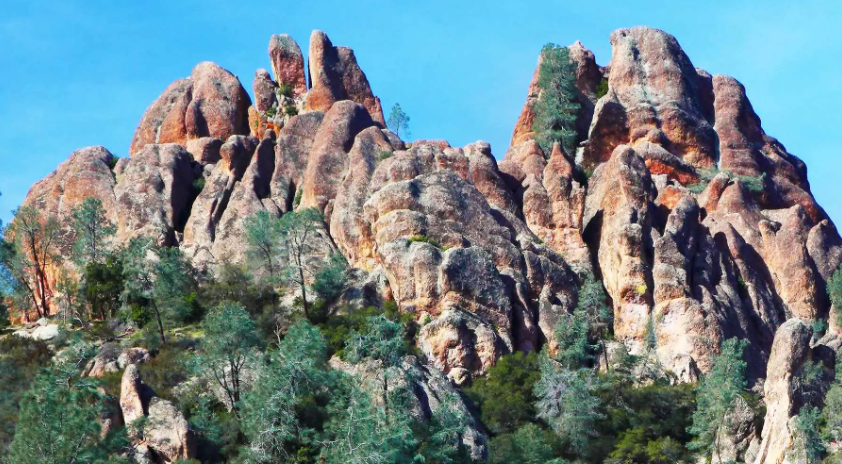
Pinnacles National Park, located in central California, is a unique and rugged destination known for its dramatic rock formations, diverse wildlife, and opportunities for outdoor adventure. Here’s a travel guide to help you plan your visit to this fascinating national park:
1. When to Visit:
- The best time to visit Pinnacles National Park is during the fall, winter, or spring when the weather is mild and comfortable for hiking and outdoor activities. Summers can be extremely hot, so plan accordingly.
2. Getting There:
- Pinnacles National Park has two main entrances: the East Entrance and the West Entrance. The park is located about 80 miles south of San Jose, California.
- The nearest major airport is San Jose International Airport.
3. Visitor Centers:
- Start your visit at one of the park’s visitor centers: the Pinnacles Visitor Center (West Entrance) or the Bear Gulch Visitor Center (East Entrance). Here, you can obtain park maps, information on ranger-led programs, and learn about the park’s geology and wildlife.
4. Hiking:
- Pinnacles National Park offers numerous hiking trails of varying lengths and difficulty levels. Some popular hikes include the Condor Gulch Trail, High Peaks Trail, and the Bear Gulch Cave Trail.
- Be sure to check trail conditions and the park’s website for any trail closures or restrictions.
5. Rock Climbing:
- The park is a popular destination for rock climbers, with opportunities for both beginner and advanced climbers. Climbers must register at the visitor center and adhere to climbing regulations.
6. Bird Watching:
- Pinnacles National Park is known for its population of California condors, one of the world’s most endangered birds. Birdwatchers can view these majestic creatures in their natural habitat.
7. Wildlife Viewing:
- Keep an eye out for other wildlife in the park, including mule deer, bobcats, and a variety of bird species. Early morning and late afternoon are prime times for wildlife spotting.
8. Photography:
- Capture the park’s unique rock formations, colorful wildflowers, and scenic vistas with your camera. Sunrise and sunset provide excellent lighting for photography.
9. Ranger Programs:
- Join ranger-led programs and guided hikes to learn more about the park’s geology, ecology, and cultural history. Check the park’s schedule for program times and locations.
10. Safety Precautions:
- Be prepared for changing weather conditions. Dress in layers, carry plenty of water, and protect yourself from the sun.
- Stay on marked trails and respect Leave No Trace principles to preserve the park’s fragile ecosystem.
11. Camping:
- Pinnacles National Park offers two campgrounds: Pinnacles Campground (West Entrance) and the more primitive and remote Gail J. Rich Campground (East Entrance). Reservations are recommended, especially during peak seasons.
12. Nearby Attractions:
- Explore nearby attractions like San Benito County Historical Park and the charming town of Hollister.
13. Entrance Fees:
- There are entrance fees to access the park, which help support its maintenance and conservation efforts. Check the National Park Service website for the latest fee information.
Pinnacles National Park offers a chance to explore unique geological formations, enjoy scenic hikes, and observe diverse wildlife in a relatively compact and accessible setting. Whether you’re hiking among the towering rock spires or watching California condors soar overhead, the park provides a memorable and adventurous experience for nature enthusiasts and outdoor adventurers.

 Harness Money
Leave a comment